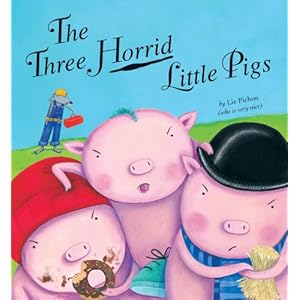
This week we started a literature study of the Three Little Pigs. On Monday we created a Circle Map with all the things we knew about The Three Little Pigs story.
The students were also given a Three Little Pigs Reading Response Log. This is where we are keeping all the information about our literature study. We completed a Story Map after we read each story.
Seeing how other teachers structured their math time inspired me to post this blog about math in my classroom. When the students first walk into the classroom they have to answer the question of the day. I got the kit from Lakeshore. The students place their pictures up, then we discuss the results during calendar.
After they answer the question of the day the students then complete the story problem of the day. I use address labels. I like them because they are easy. I can usually get three days on each sheet of labels.
After the students get started with the problem of the day, the survey person (a weekly job) goes around and asks the survey question of the day. I like this because it gives the students time each week to think mathematically about the results of our daily survey. I got the idea from Kim Adsit. Her e-book had questions monthly but I needed daily questions, and decided to make up some of my own. Thanks for the inspiration Ms. Adsit!
Each Monday the students answer the graph question of the week. We do lots of activities with the weekly graph. All the work we do with the graphs are placed in the students Weekly Graph Journal. On Monday they answer the graph question. On Tuesday they reproduce the results of the graph in their Graph Journals. On Wednesday they write a few sentences about what they observe about the results. Then they have to write two addition sentences (later we will add subtraction sentences). On Thursday they have to write a story problem using the graph. Ex. Ten people like red apples. Two people like green apples. How many in all?
After the students complete the problem of the day, they look on the math game board to find out which game they will play. Sometimes it’s free choice, sometimes it’s flashcards. This provides good practice for addition and subtraction facts. At the beginning of the year I asked all students to bring in a set of addition or subtraction flash cards. They do triple duty as both partner practice, whole class math games (boys against the girls) and math games.
This is a picture of our Math Buzz book. I like doing math in the morning, because the students are alert and ready to work. We work with the buzz book during our morning meeting. I usually read some type of math trade book that goes along with whatever we are working on during our math unit.
This morning we wrote subtraction story problems. After writing them the students had to illustrate a picture to go along with their story.
Sometimes we complete math projects. This past Friday the students completed a count by tens chart.